Dominion Legist Legal Platform
Dominion Legist · Fullstack / product engineer
Built and evolved Dominion Legist from a legal CMS into a multilingual client platform for understanding services, evaluating the firm, reading legal guidance, and starting a confidential consultation.
- Reframed six legal practice areas as clear, decision-oriented service journeys in Uzbek, English, and Russian.
- Connected the public brand, founder profile, legal publishing, FAQ, and confidential inquiry flow in one platform.
- Kept editorial and media operations manageable through a secure CMS while substantially upgrading the public experience.
Next.js 16 · React 19 · TypeScript · Tailwind CSS 4 · MongoDB · AWS S3 · NextAuth · TipTap 3
This is a private project. Sensitive implementation details and source code are not publicly available.
Context
Dominion Legist is a business-focused legal consulting company in Uzbekistan. The product began as Doston Law's website and CMS, then evolved into a broader public platform under the Dominion Legist brand at dominion-legist.uz.
The current experience serves two audiences: prospective clients who need to understand a legal issue before making contact, and legal operators who need to keep services, profiles, articles, and media current without developer intervention.
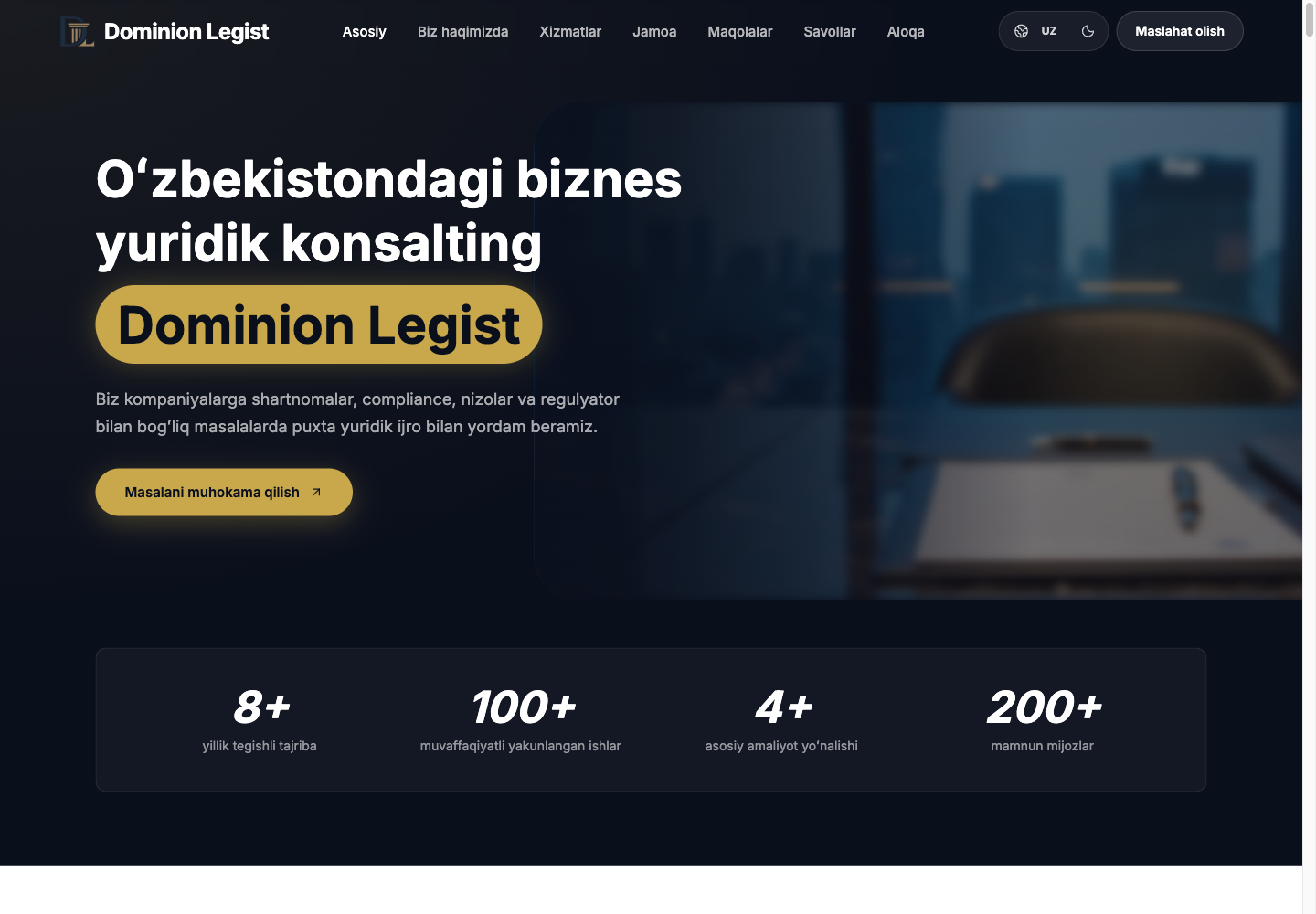
The redesigned homepage defines the firm's business-legal focus immediately, then supports that positioning with experience signals and a direct consultation path.
Problem
The original product solved publishing, but the public experience still had to explain a growing legal practice clearly. Visitors needed to distinguish service areas, understand the firm's operating standards, find useful legal writing, and know what would happen after submitting a matter. The new brand and domain also had to remain consistent across navigation, metadata, structured content, and locale-specific routes.
Approach
I treated the upgrade as a legal-service communication system, not only a visual redesign. Each page answers a specific client question: what the firm handles, who leads the work, how a matter progresses, what information is required, and how confidentiality is signaled.
The information architecture now supports Uzbek, English, and Russian; six defined practice areas; a founder-led credibility layer; legal articles and FAQs; and direct paths from education to consultation. The private CMS remains the operational layer behind public publishing.
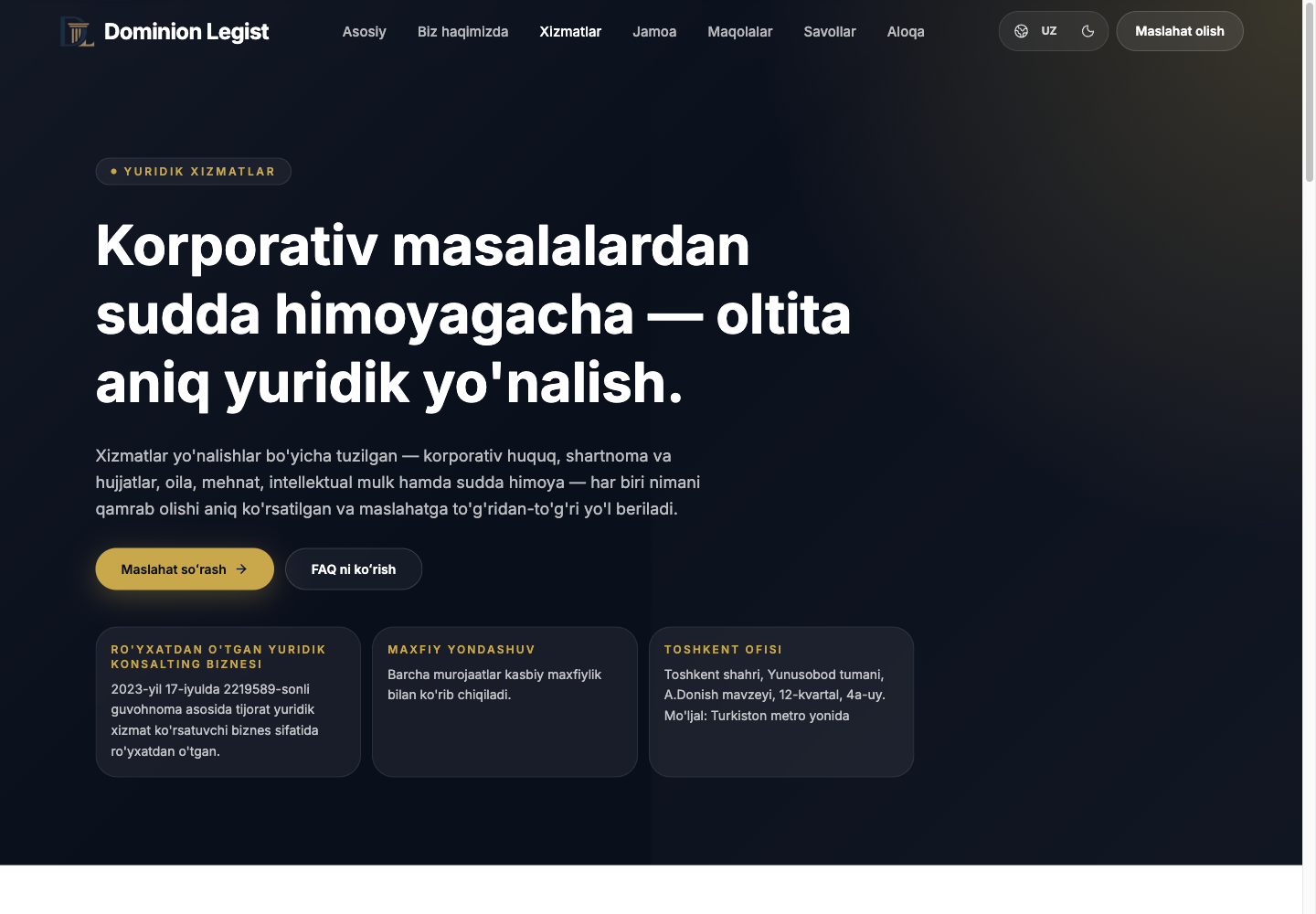
The services index defines corporate law, contracts and documents, family, labor, intellectual property, and court protection before directing visitors to a focused service page or consultation.
What Shipped
- A multilingual public website with locale-aware navigation, metadata, and structured service content.
- Six practice-area journeys with plain-language definitions, detailed scope, related legal writing, and consultation calls to action.
- A founder profile, company standards, FAQ, legal notices, and trust signals that make the practice easier to evaluate.
- A structured inquiry journey with response expectations, privacy consent, frontend and server-side validation, and Telegram/email delivery.
- A TipTap-based CMS with secure access, media management through AWS S3, and reusable publishing workflows.
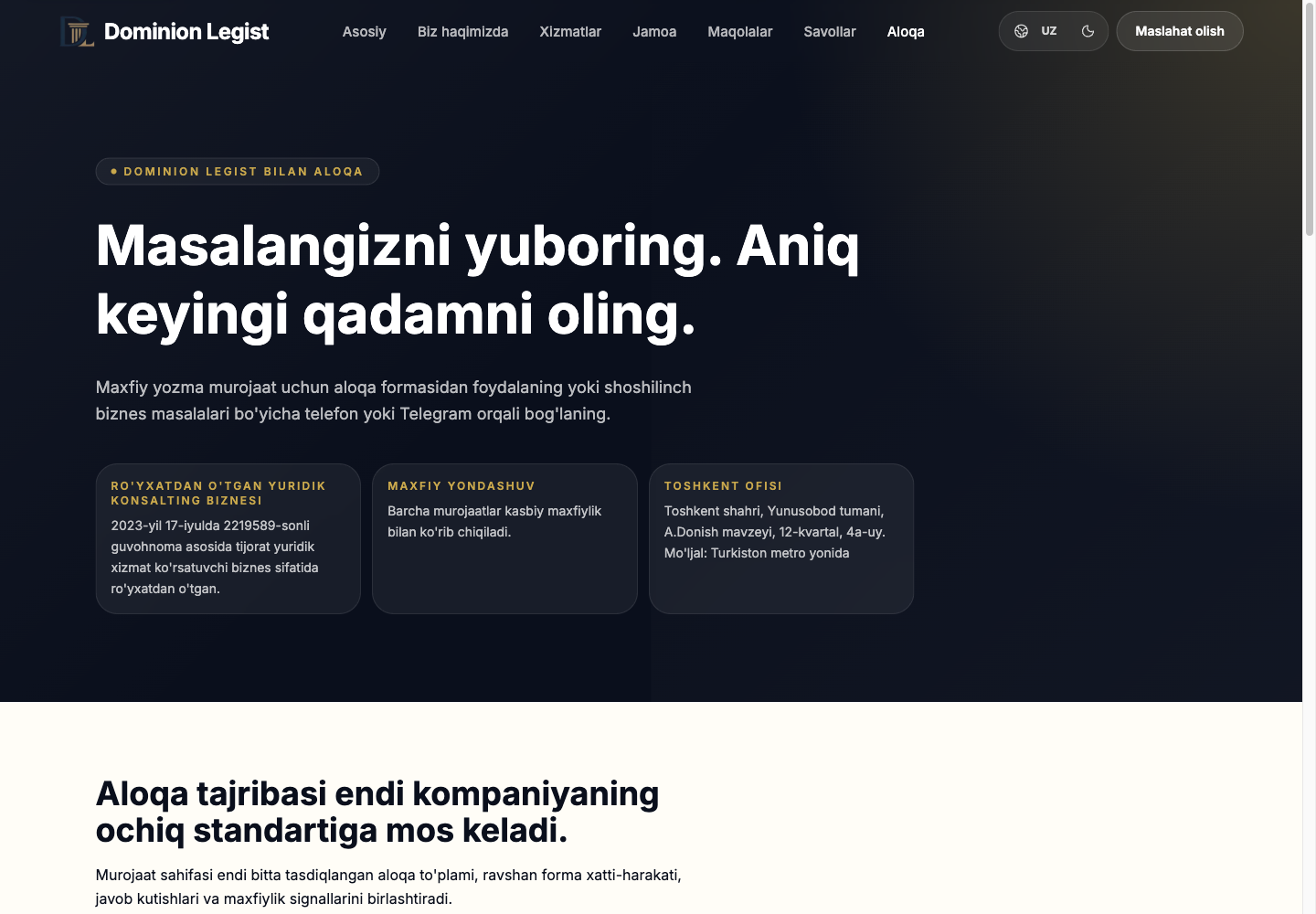
The contact experience defines the firm's confidentiality, registration, office, and response standards before asking a visitor to share a legal matter.
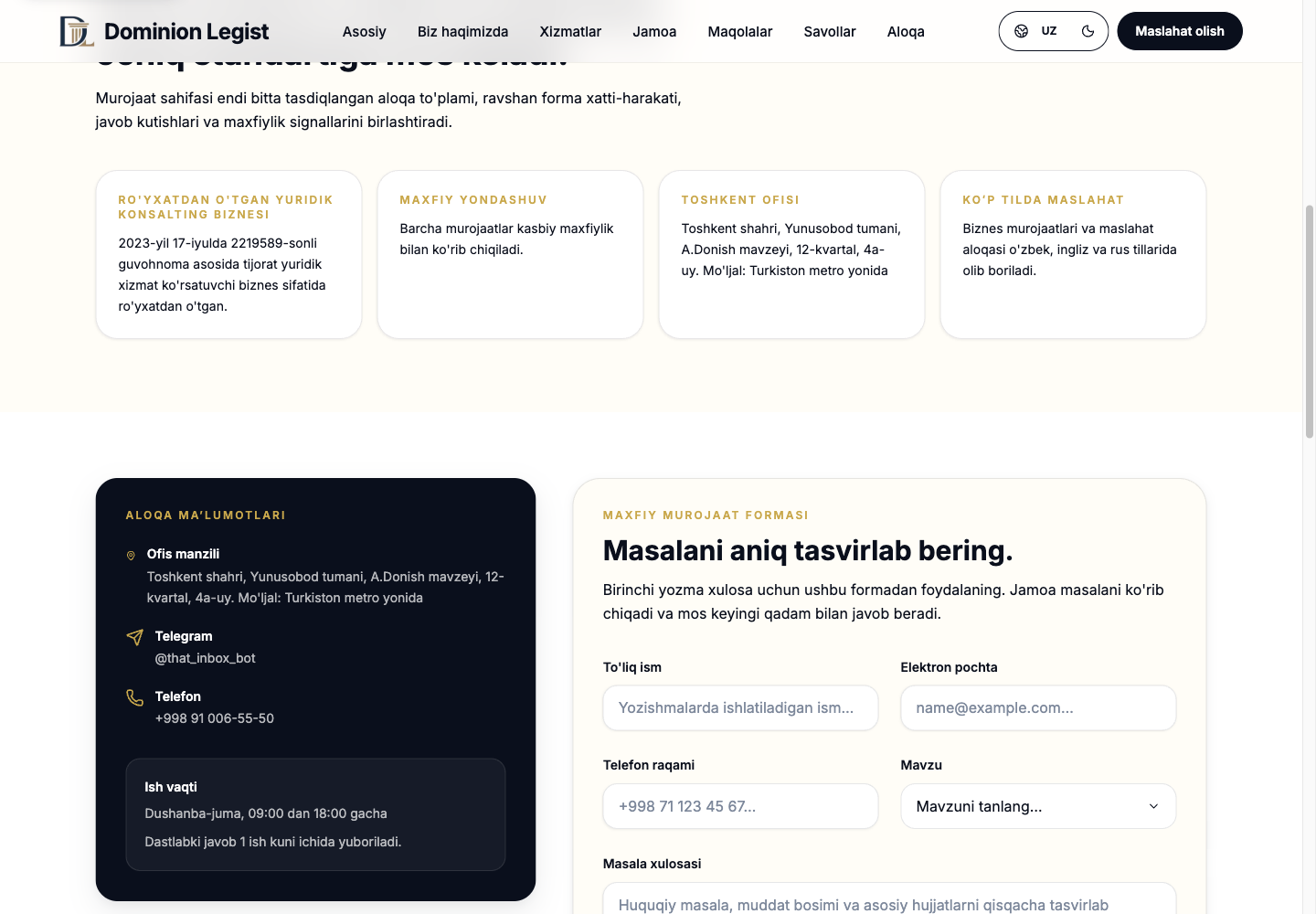
The intake surface combines verified contact details, multilingual consultation availability, expected response time, and a structured form so the next step is visible before submission.
Results
- The platform now presents one consistent Dominion Legist identity across the public website and the new production domain.
- Visitors can compare legal practice areas and move from a broad concern to a relevant service or confidential consultation path.
- Editorial work remains manageable in-house while the public content foundation supports multilingual discovery and legal-topic publishing.
- The website operates as a client education and intake product, not simply a brochure or isolated CMS.
Technical Notes
The current platform uses Next.js 16 and React 19 with TypeScript and Tailwind CSS 4. MongoDB stores structured content, TipTap 3 powers the editorial experience, NextAuth protects internal workflows, and AWS S3 handles managed media. The public layer adds locale-aware routing, SEO metadata and structured data, responsive interactions, and validated inquiry delivery without exposing private admin tooling.