AIFin Insurance Agent Platform
Built a private insurance agent platform where customers can start an AI consultation, managers can monitor and continue the workflow, and companies can route internal or external phone calls through the same operating console.
- Connected AI-guided customer intake with manager-side follow-up, reservations, call records, and operational review.
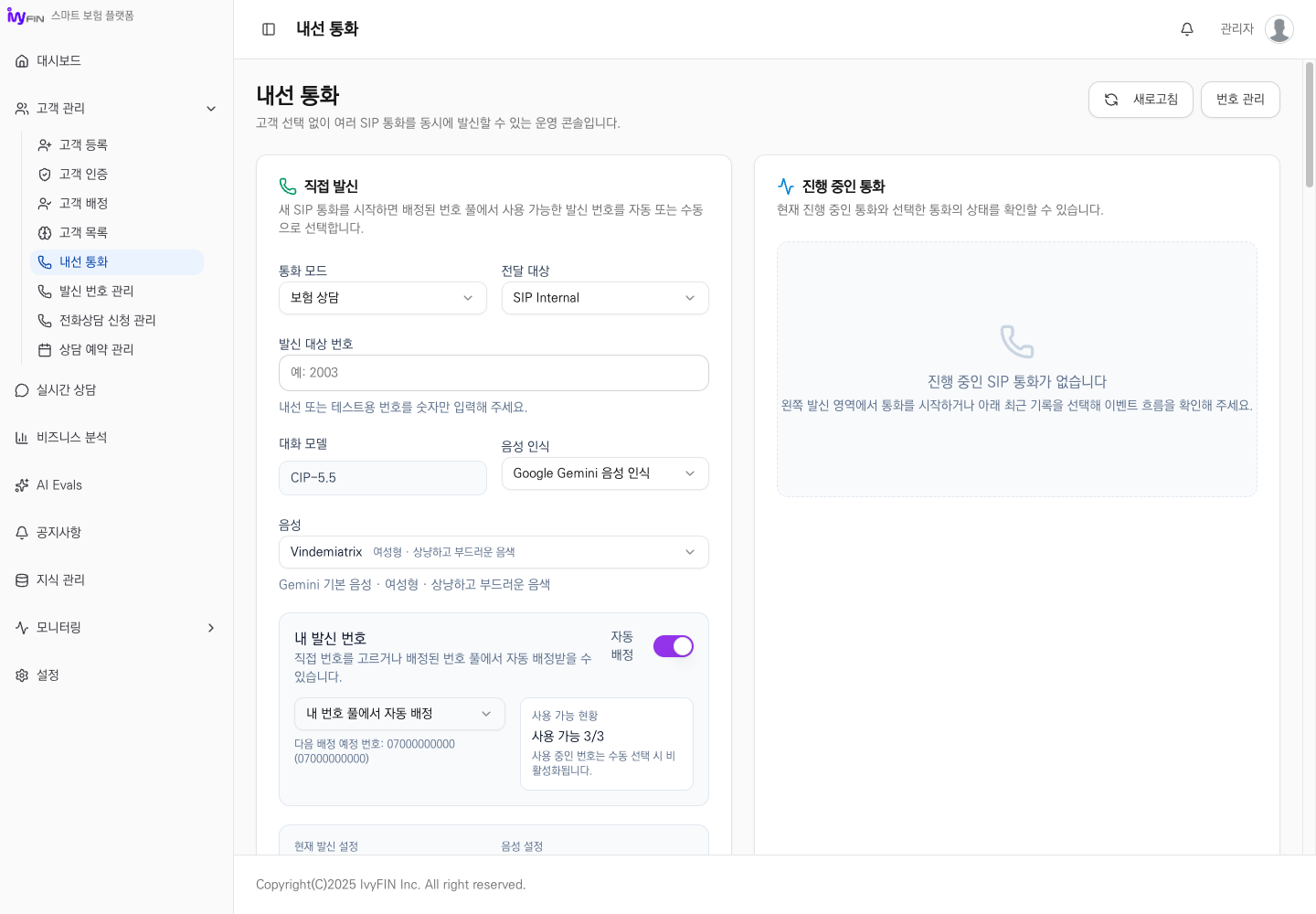
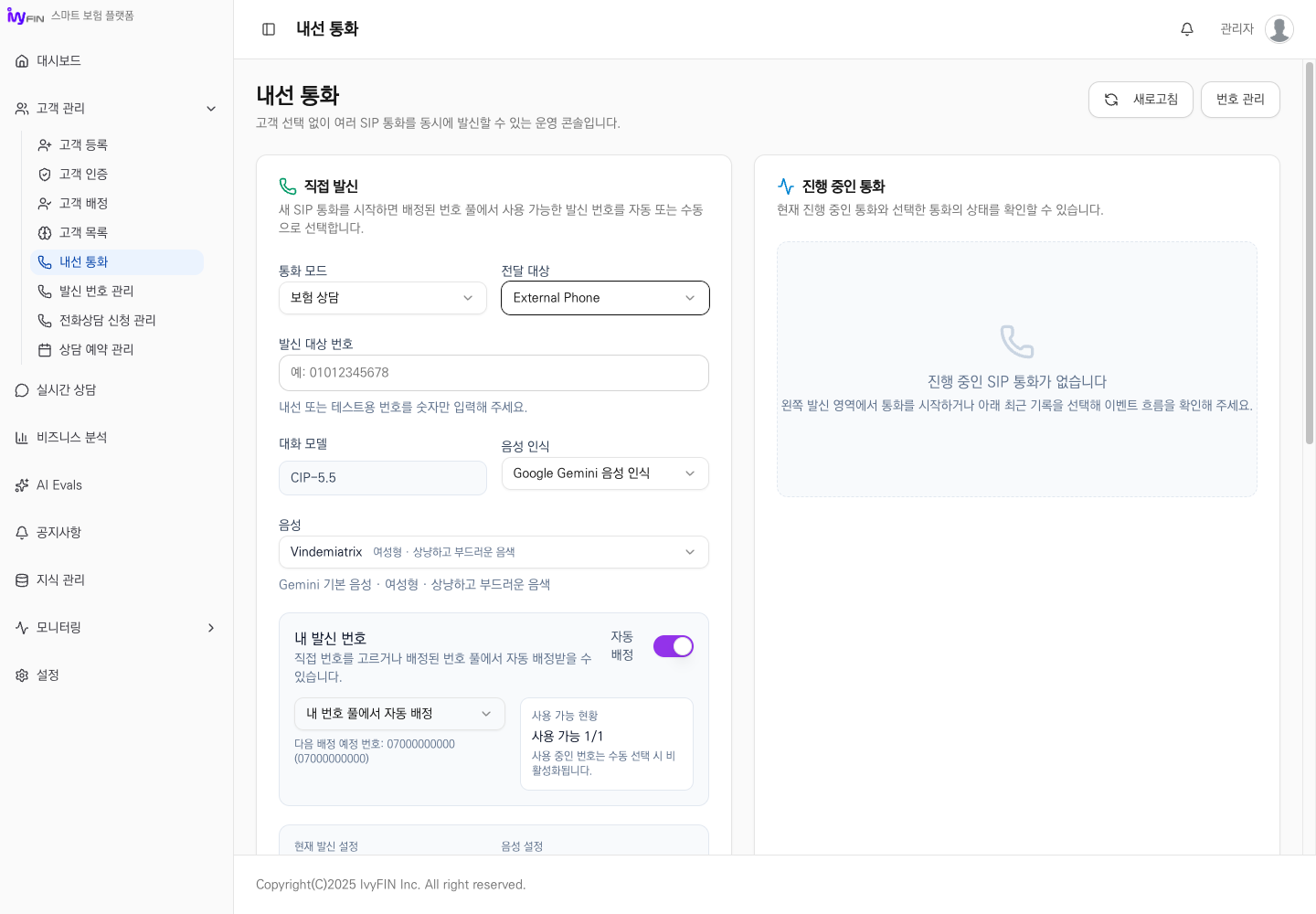
- Added internal and external SIP call workflows so companies can move from digital consultation into live advisor conversations.
- Turned insurance guidance into a stateful product flow backed by realtime events, knowledge retrieval, and auditable consultation history.
This is a private project. Sensitive implementation details and source code are not publicly available.
Context
AIFin is a private insurance consultation platform built around a simple operating need: customers want clear guidance, while companies need enough context, controls, and call history to handle follow-up responsibly.
This case study stays intentionally abstract. The product handles sensitive customer and operational workflows, so the public explanation focuses on the product shape, the call surfaces, and the system design without exposing credentials, customer data, prompts, or provider configuration.
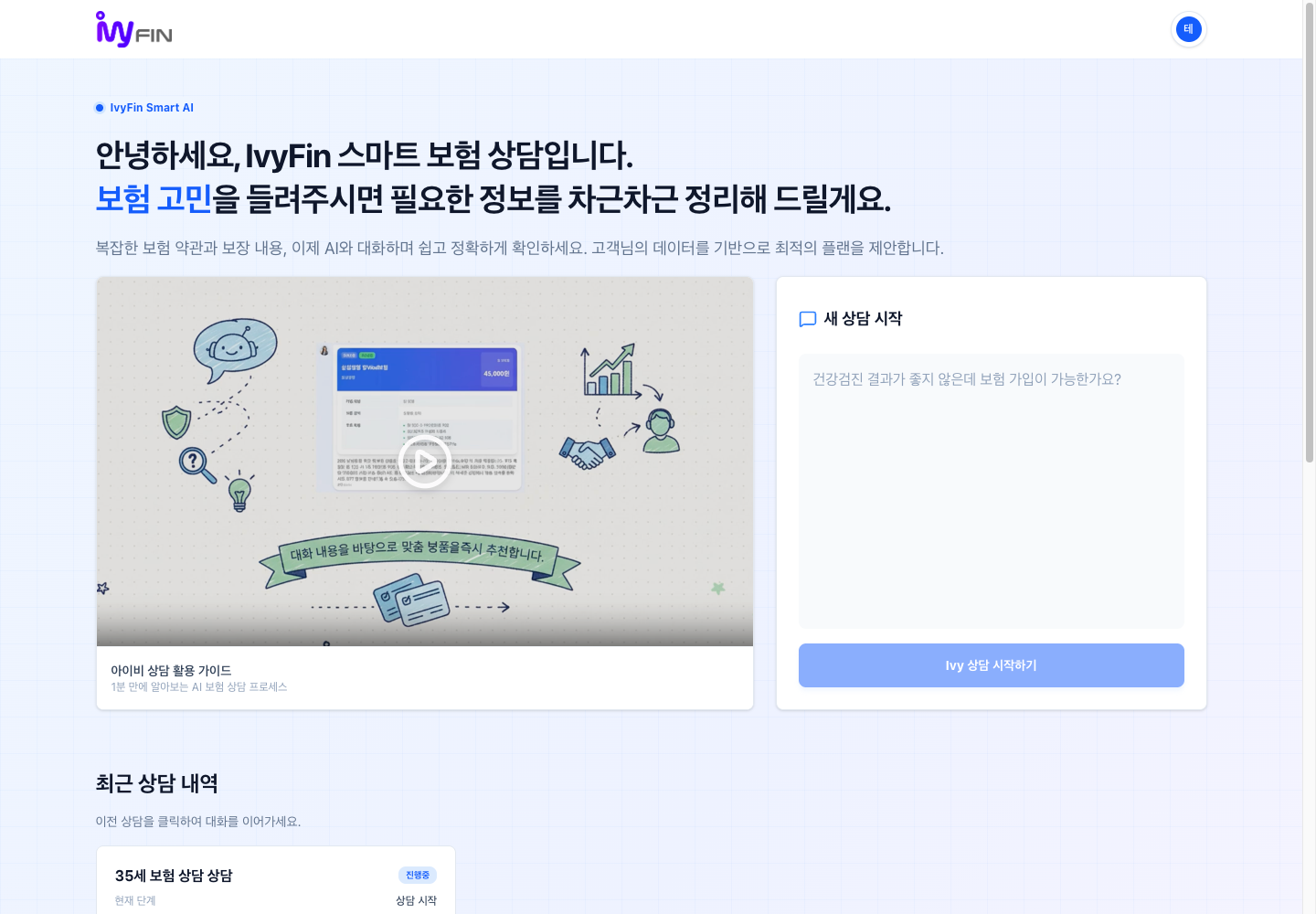
Problem
Insurance consultation is difficult to reduce to a static form. A useful agent has to ask clarifying questions, collect profile context, explain next steps, recommend an appropriate path, and know when a human advisor should continue the conversation.
The company side needed more than a chatbot. Managers needed a place to see active consultations, handle reservations, review records, and start calls. The call workflow was especially important because the platform had to support both internal SIP extensions and external phone numbers from one controlled admin surface.
Approach
I shaped the product as three connected surfaces:
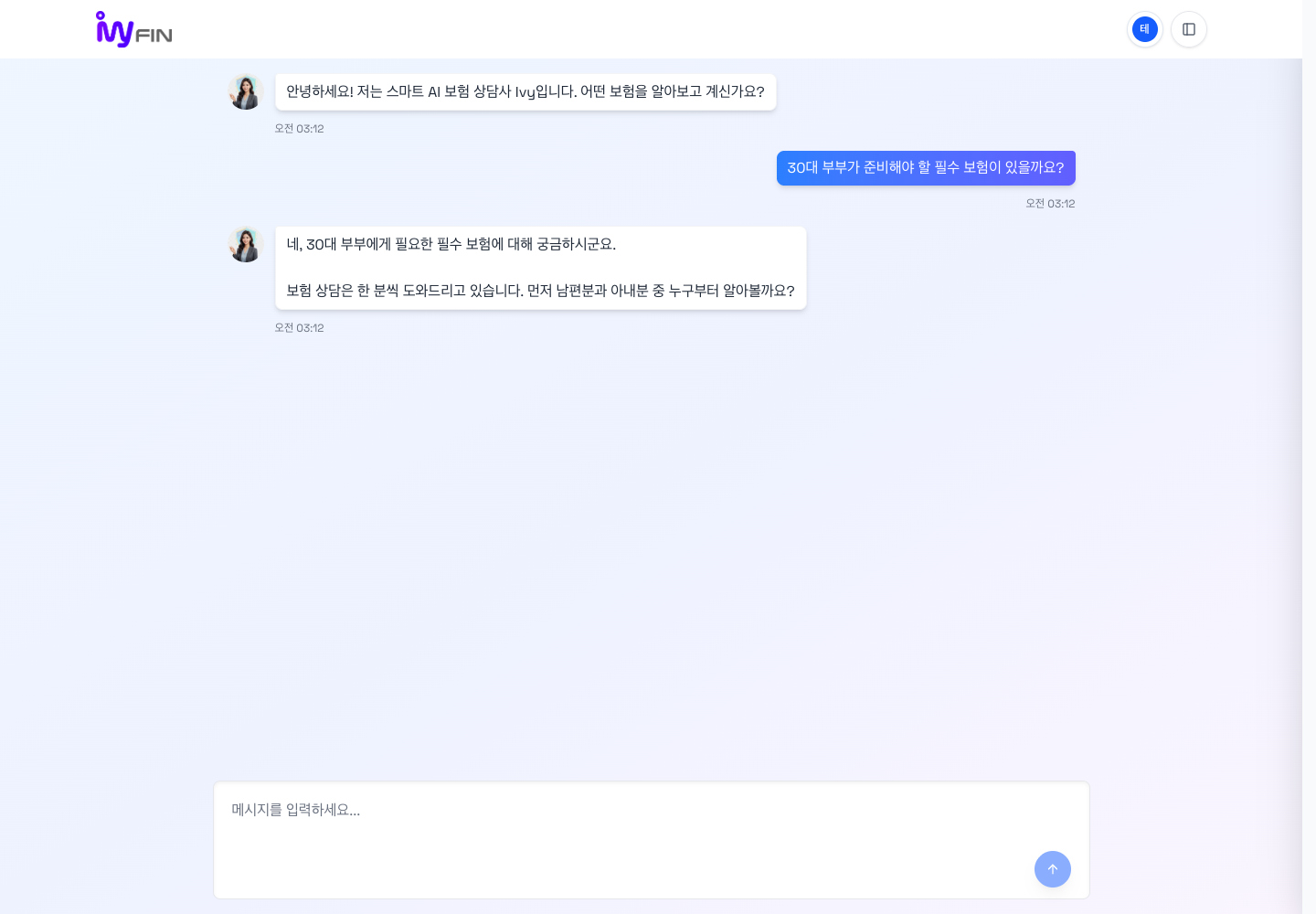
- A customer portal for AI-guided insurance intake and consultation history.
- An admin console for customer management, assignments, realtime consultation, reservations, knowledge operations, and monitoring.
- A call operations layer for internal SIP calls, external phone calls, call records, transcripts, and follow-up review.
The AI layer is treated as part of the workflow rather than a separate prompt box. Consultation state, customer context, product recommendations, manager actions, and call activity all move through the same backend system.
What Shipped
- Customer registration, login, consultation start, conversation history, and advisor follow-up entry points.
- AI-assisted insurance intake that can move through structured consultation steps instead of leaving the user inside an open-ended chat.
- Manager/admin workflows for customer review, assignment, realtime conversation monitoring, reservations, announcements, knowledge management, and AI evaluation review.
- SIP-based call operations that support both internal extension calls and external phone calls from the admin portal.
- Call records and follow-up infrastructure for status tracking, event history, recordings, summaries, and transcript-oriented review.
Results
The platform turns insurance guidance into an operating system for AI-assisted consultation. Customers can begin with a guided AI conversation, while managers can take over the workflow through chat, scheduling, and calls without losing the context that was already collected.
The internal and external call surface is the strongest operational piece. It gives companies a repeatable way to bridge AI intake with real advisor conversations, while still keeping calls tied to records, runtime settings, and reviewable history.
Technical Notes
The implementation combines React 19, TypeScript, and Vite for the customer and admin portals with a NestJS backend for auth, consultation state, realtime events, AI orchestration, call records, and background jobs. The data layer uses Prisma/PostgreSQL, Redis/BullMQ, Qdrant, Neo4j, and object storage. Realtime chat and call status use Socket.IO, while SIP/Asterisk integration powers the internal and external phone-call workflows.
Keep going
Need this kind of product work?
I work on AI features, product interfaces, and content systems that have to ship cleanly and hold up in production.